z-z396912730607.webp)
z-z992569040935.webp)
Chrome Plating Application
Chrome Plating on Plastic (PoP)
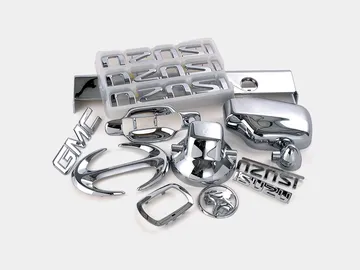
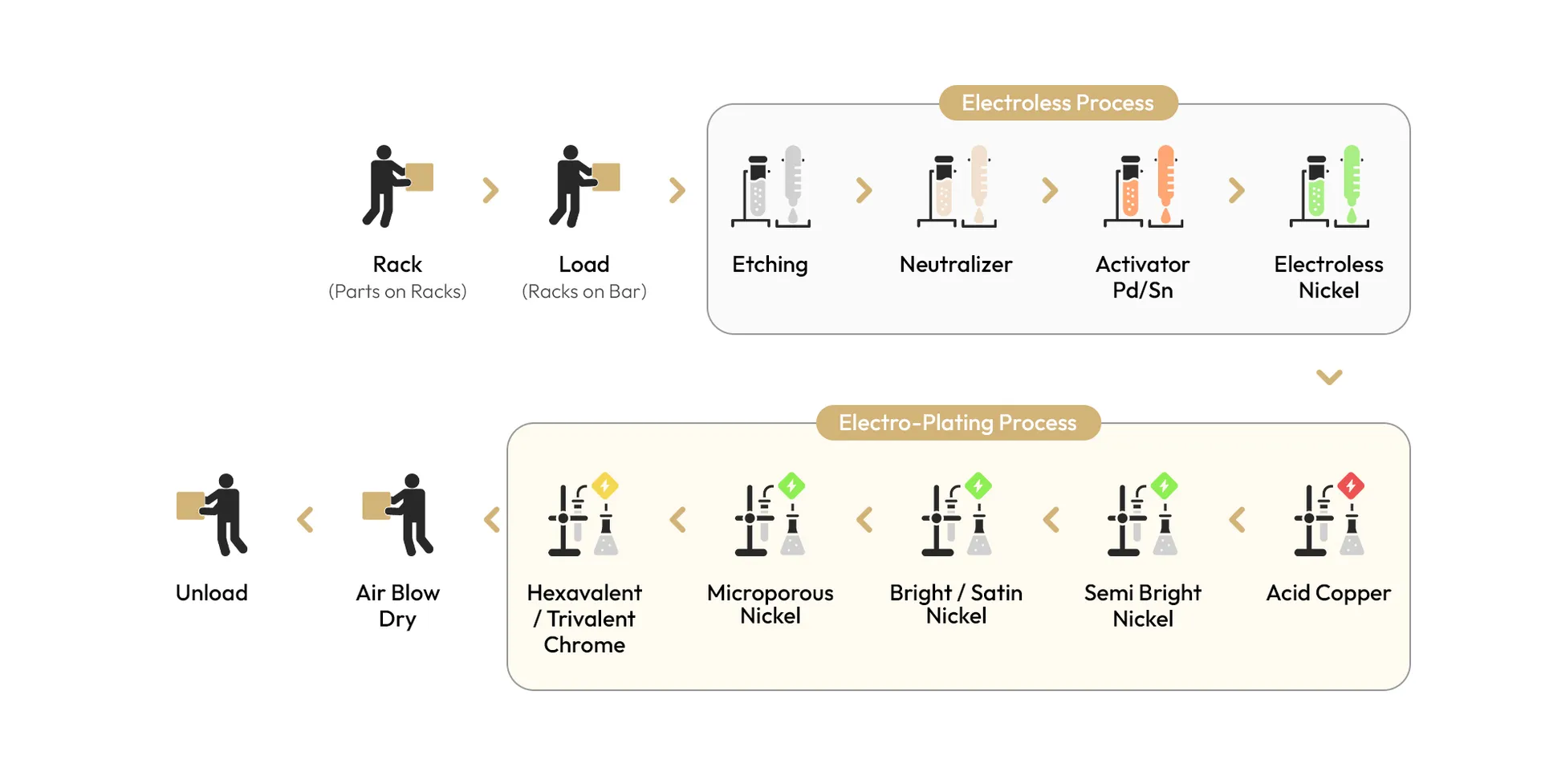
Chrome Plating on Plastic process starts with the chemical processes to make plastic workpieces to be electrically conductive and then follows by 3 key electroplating processes which are copper (Cu). nickel (Ni) and chromium (Cr) plating.
The copper layer (Cu) is to help the plastic workpieces to tolerate the temperature changes.
The nickel (Ni) layer is to prevent the corrosion of the plating surface.
The chromium (Cr) layer is to make the gloss surface and improve its hardness.
Most of plastic resins that can apply chrome plating are molded with ABS or PC/ABS (Polycarbonate + ABS) plastic injection.
The automotive companies such as TOYOTA, MAZDA, ISUZU, FORD and the leading electrical appliances brands such as TOSHIBA, HITACHI, MITSUBISHI, have confidence with us to produce plating parts for them.
PROCESS FLOW
CHROME PLATING
Chrome Plating Process
Chrome Plating Line
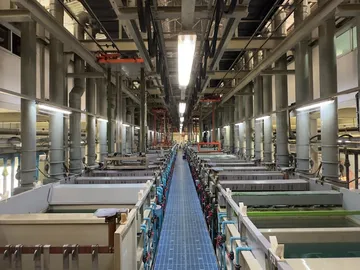
The plating line assembles subsequent plating tanks with more than 75 stations. Each station has 2000mm width and 1500mm depth, so the maximum plating workpiece size in the line is about 1600 x 1000 mm.
In addition to gloss chrome plating which is called Bright Chrome, we can also make semi-gloss chrome plating, called Satin Chrome by changing the Bright Nickel to Satin Nickel process instead. The Satin Chrome is normally used in interior parts for automotive industry.
For chrome plating process, we can choose between Hexavalent Chrome (Cr+6) or Trivalent Chrome (Cr+3) according to customer requirements.